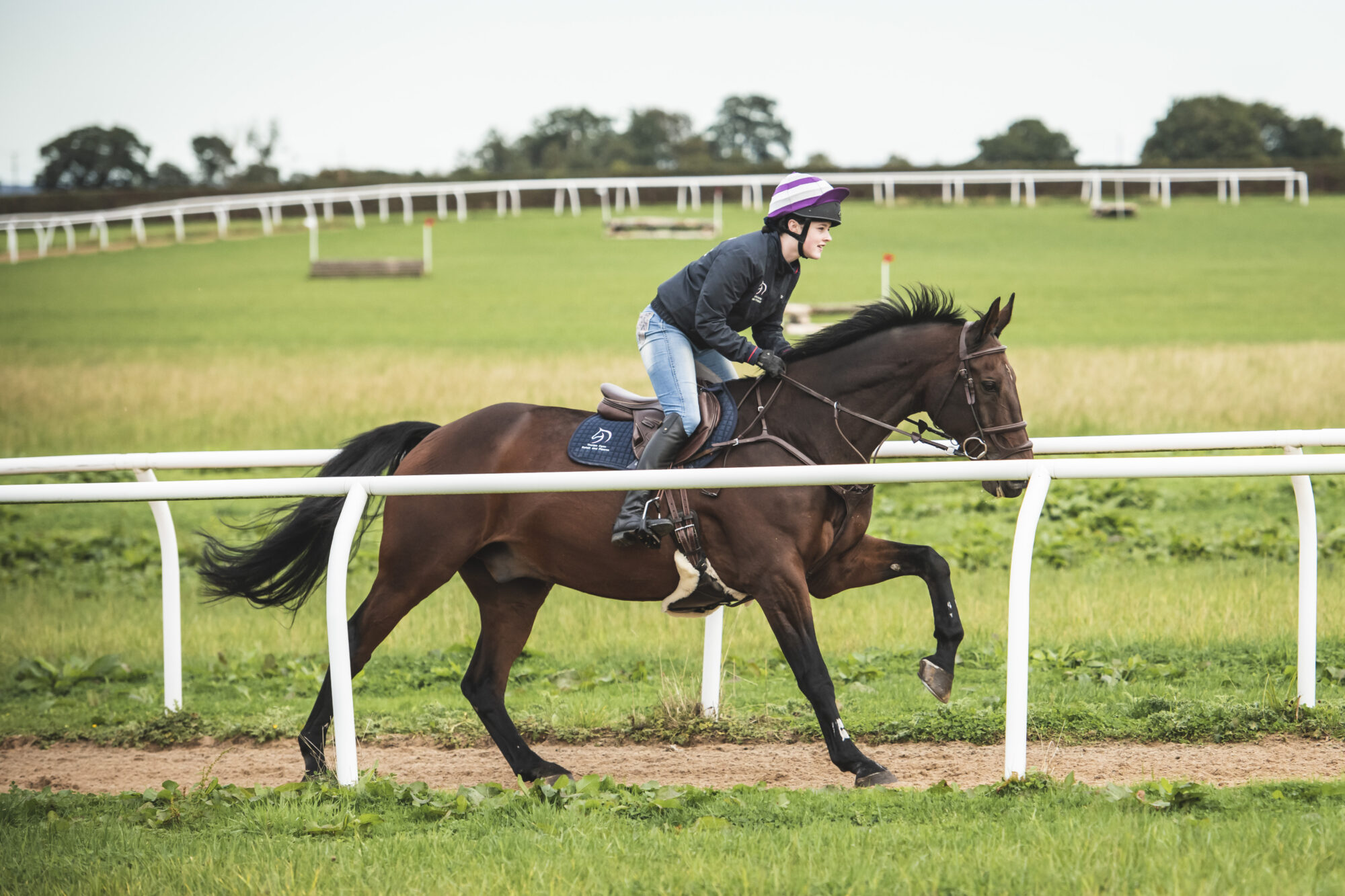
When you hear the word “gallops”, do you picture sleek, fit racehorses flying up an all-weather gallop or high-level event riders using them to build horses’ fitness ahead of their next competition? You would be forgiven for thinking that, as hundreds (or thousands!) of racehorses and sports horses across the UK are worked on gallops every single day – but they aren’t just for elite horses. There are gallops all over the country just like ours that are available for hire and they can be one of the most useful and enjoyable tools for riders of all levels and disciplines. Here at Thorpe Farm, we love seeing horses of all shapes and sizes come to use our gallops and hearing from their riders how beneficial and fun their sessions are.
It’s easy to see why – by this time of year bridleways are muddy, the roads can feel unsafe, especially if there’s ice and snow on the ground, and the school can start to feel repetitive. The gallops offer a change of scenery, consistent ground and a chance for horses to move forward in a way that simply isn’t always possible elsewhere in winter. So how can you make the most of the gallops with your horse?
In this month’s blog we’re focusing on how to teach your horse to gallop safely and confidently, sharing a few pointers to ensure your position is secure and effective, and looking at how working on pace and balance outside the arena can help improve everything you do back at home.
Why teaching a horse to gallop matters
Galloping isn’t just about going faster and faster and hoping you have brakes when it’s time to slow down! It’s important to teach horses to balance themselves, move freely through their bodies and respond to subtle changes from you so that you can dictate the pace and stay in control. With a little bit of practice, you’ll develop confidence, stability and feel even when your horse is flying like the wind.
We often find that green horses benefit enormously from learning to gallop properly. Many horses naturally want to go forward but some struggle to organise their bodies when asked to increase pace. Others feel overwhelmed in open spaces because they haven’t been given the tools to understand what is being asked. Starting on the gallops and introducing fast work in a controlled environment helps them understand their own balance, improves their reactions to half-halts and transitions and gives them a clearer understanding of forward energy without tension.
And for riders who feel nervous about faster work, a structured setting like the gallops provides a safe and predictable environment to practise without the added worry of uneven ground or traffic.
Preparing to introduce the gallop
Before asking for speed, it’s important that your horse is comfortable and obedient in their transitions. A balanced, rhythmic canter should feel relaxed and adjustable, with the horse listening to your aids and staying straight.
Choosing the right environment makes a big difference. A flat or gently uphill stretch with good footing helps horses find their balance more easily and encourages them to use themselves correctly without rushing.
Your position as the rider
Your position plays a huge role in helping the horse understand what you’re asking. Many riders find it helpful to shorten their stirrups slightly – just a couple of holes – to improve your stability at speed and allow for a lighter position.
Moving into a light or two-point seat, similar to a jumping position, takes pressure off the horse’s back and brings you in line with their centre of gravity at the gallop. This freedom encourages a more natural stride and helps prevent tension. Bridge your reins so that you’re safe and secure if the horse stumbles at speed.
Keep your leg steady and supportive rather than driving constantly. Think about allowing the horse forward rather than pushing them faster. Your upper body should feel balanced and quiet, with weight supported through your calves and heels. It’s important not to throw the reins away. Maintain a consistent contact so the horse still feels guided and supported.
Making the transition
From a forward, active canter, allow the stride to lengthen by softening slightly through your hands and maintaining steady leg pressure. Avoid kicking or rushing the moment, think about the transition to gallop feeling like a smooth progression rather than a sudden acceleration. Start with short stretches. This helps both horse and rider build confidence without fatigue or loss of balance.
To come back to canter then trot, think about bringing your shoulders up and allowing your seat to return to the saddle. Engage your core and use your body to influence the transition, rather than relying solely on the reins.
Using the gallops to develop changes within the pace
One of the biggest benefits of working on the gallops is the opportunity to develop adjustability within a pace. The open space encourages horses to go forward more naturally, which makes it easier to work on extending and collecting within trot and canter.
Many horses that feel flat or resistant in the school suddenly feel more enthusiastic when given room to move. Working outside of an arena removes the mental pressure of constant circles and corners, allowing horses to focus on rhythm and straightness instead.
You can use the gallops to practise:
- Lengthening and shortening the stride within canter
- Developing a more expressive trot
- Improving responsiveness to half-halts
- Introducing lateral work on long, straight lines
The key is to think about balance and control rather than speed. Short periods of extension followed by rebalancing help horses learn to carry themselves and respond to subtle changes in your aids.
A tool for every rider and every horse
The gallops are brilliant for building fitness for competition, but the benefits don’t stop there. They’re also a fantastic way to introduce variety into training, especially during winter when options can feel limited. We see riders using them to build confidence, teach young horses about forward movement, improve transitions and simply give horses a chance to enjoy moving in a more open environment.
Sometimes stepping away from the arena and changing the setting is exactly what you and your horse need. If you’d like to book a session at our gallops, just send a message using the contact form here.